




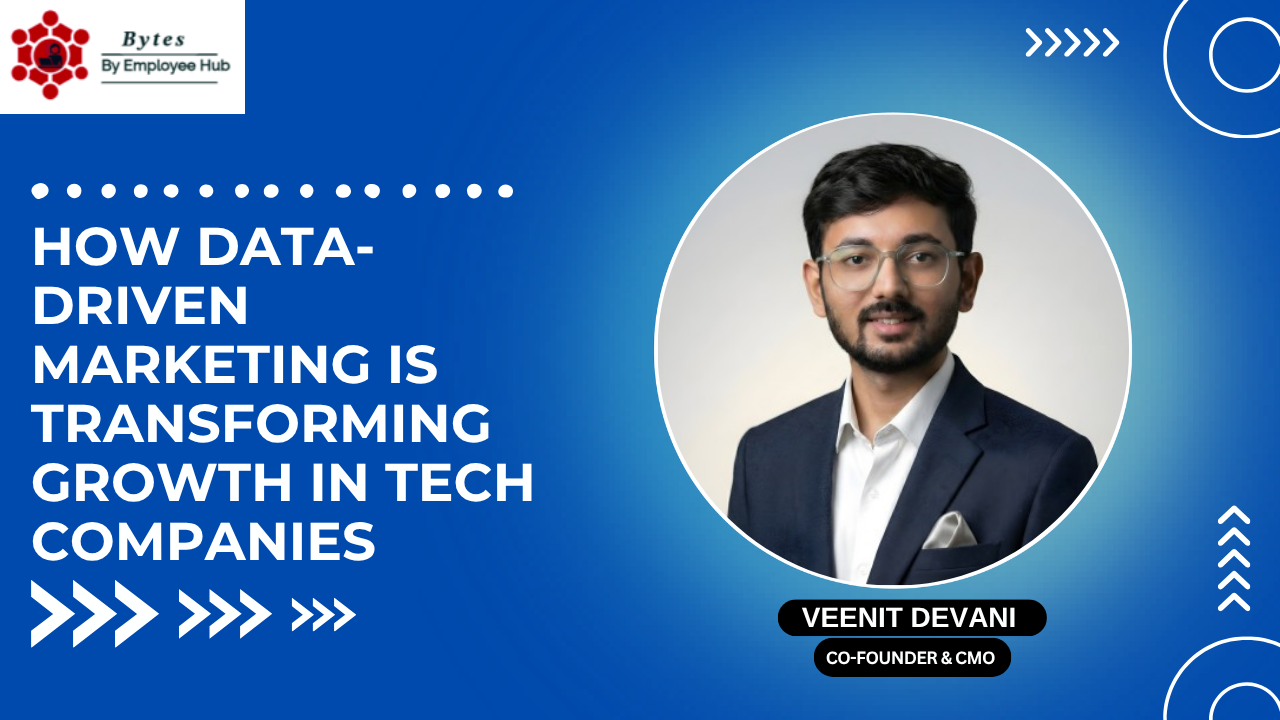
This article is written by Veenit Devani, Co-Founder & CMO of Appifly Infotech, who is actively leading strategic marketing and growth initiatives in the tech solutions space. Drawing from real-world experience, this piece explores how data-driven marketing is reshaping the way tech companies scale and succeed in a competitive digital landscape.
What is Data-Driven Marketing?
Data-driven marketing refers to the practice of using customer data, analytics, and insights to guide marketing strategies and decisions. Instead of relying on guesswork, marketers now use real-time data to understand customer behavior, preferences, and engagement patterns.
This approach enables businesses to:
- Target the right audience
- Personalize messaging
- Optimize campaigns in real time
- Measure ROI with precision
Why Data is the Backbone of Modern Tech Growth
For tech companies, growth is not just about acquiring users—it’s about acquiring the right users and retaining them.
Here’s how data-driven marketing is changing the game:
1. Precision Targeting
Gone are the days of broad, generic campaigns. With data, companies can segment audiences based on behavior, demographics, and intent.
This means:
- Higher conversion rates
- Lower acquisition costs
- Better customer experiences
2. Personalization at Scale
Today’s customers expect personalized interactions. Data allows tech companies to deliver tailored content, product recommendations, and communication.
From email campaigns to website experiences, personalization drives:
- Increased engagement
- Higher retention
- Stronger brand loyalty
3. Real-Time Decision Making
One of the biggest advantages of data-driven marketing is agility.
Marketers can:
- Track campaign performance in real time
- Identify what’s working (and what’s not)
- Make instant adjustments
This reduces wasted spend and maximizes impact.
4. Improved ROI & Performance Tracking
Data eliminates ambiguity. Every campaign, channel, and touchpoint can be measured.
Key metrics like:
- Customer Acquisition Cost (CAC)
- Lifetime Value (LTV)
- Conversion rates
help businesses make informed decisions and justify marketing investments.
5. Predictive Insights for Future Growth
Advanced analytics and AI tools enable companies to go beyond historical data and predict future trends.
This helps in:
- Forecasting demand
- Identifying high-value customers
- Planning long-term strategies
Challenges in Adopting Data-Driven Marketing
While the benefits are clear, implementation isn’t always easy.
Common challenges include:
- Data silos across teams
- Lack of proper analytics tools
- Skills gap in interpreting data
- Ensuring data privacy and compliance
To overcome these, companies need the right technology stack, skilled teams, and a data-first culture.
The Role of Leadership in Driving Data Culture
For data-driven marketing to succeed, leadership must lead the change.
As a CMO, it’s crucial to:
- Promote data-backed decision-making
- Invest in analytics tools and training
- Align marketing with business goals
- Foster collaboration between teams
When data becomes part of the company’s DNA, growth becomes more predictable and scalable.
Final Thoughts
Data-driven marketing is no longer optional—it’s a necessity for tech companies aiming to scale in a competitive landscape.
By leveraging data effectively, businesses can:
- Make smarter decisions
- Enhance customer experiences
- Drive measurable growth
The future belongs to companies that don’t just collect data—but know how to use it strategically.


