




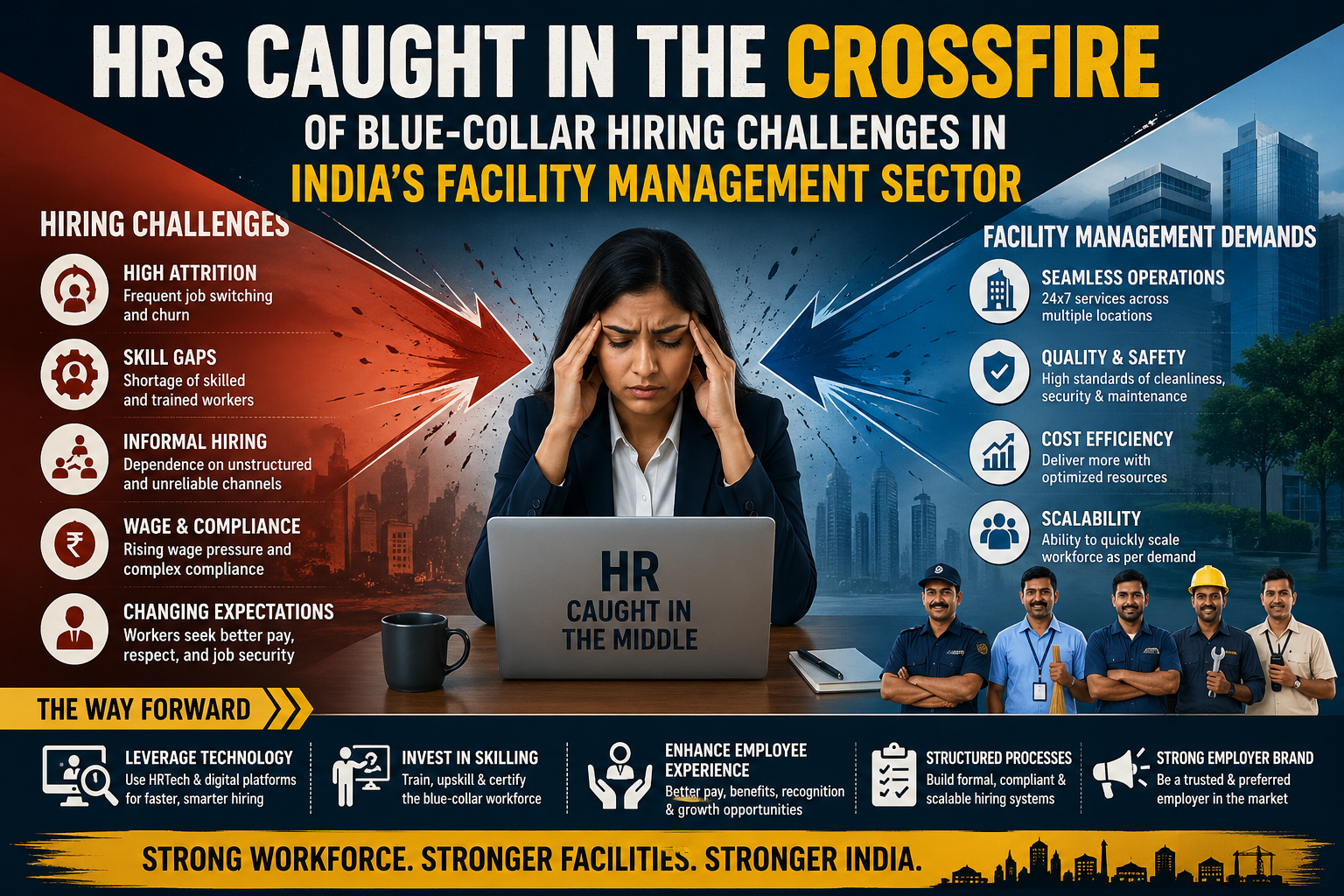
India’s facility management (FM) industry is witnessing rapid growth, driven by urbanization, expanding commercial spaces, and rising demand for organized services. However, behind this growth story lies a persistent challenge—blue-collar hiring. At the center of this struggle are HR professionals, who are increasingly caught in a complex web of talent shortages, high attrition, and evolving workforce expectations.
The Backbone of Facility Management: Blue-Collar Workforce
From housekeeping staff and security personnel to electricians, plumbers, and maintenance workers, blue-collar employees form the backbone of the facility management sector. Their role is critical in ensuring smooth day-to-day operations across residential complexes, corporate offices, hospitals, and retail spaces.
Despite their importance, finding and retaining skilled blue-collar workers remains a major hurdle for organizations.
Why Is Blue-Collar Hiring So Challenging?
1. High Attrition Rates
One of the biggest pain points for HR teams is the frequent turnover among blue-collar workers. Employees often switch jobs for marginal salary hikes, better working conditions, or shorter commute times. This constant churn increases hiring costs and disrupts service quality.
2. Skill Gaps and Training Needs
While demand for skilled workers is rising, the availability of trained talent is limited. Many candidates lack formal training, requiring companies to invest heavily in onboarding and skill development programs.
3. Informal Hiring Channels
A large portion of blue-collar recruitment still happens through informal networks, contractors, or word-of-mouth referrals. This lack of structured hiring processes makes it difficult for HR teams to ensure consistency, compliance, and quality.
4. Wage and Compliance Pressures
HR professionals must balance cost efficiency with fair wages and statutory compliance. Managing payroll, benefits, and labor laws for a large, dispersed workforce adds another layer of complexity.
5. Changing Workforce Expectations
Today’s blue-collar workers are increasingly prioritizing job security, timely payments, flexibility, and respect at the workplace. Organizations that fail to meet these expectations risk losing talent to competitors.
The HR Dilemma: Balancing Demand and Reality
HR teams in the FM sector often find themselves caught between business demands and workforce realities. On one hand, clients expect uninterrupted, high-quality services. On the other, HR professionals must deal with unpredictable workforce availability and operational constraints.
This “middle ground” pressure forces HR leaders to constantly innovate and adapt their hiring strategies.
Strategies to Overcome Blue-Collar Hiring Challenges
1. Leveraging Technology and HRTech
Digital platforms and HRTech solutions are helping streamline recruitment by connecting employers with verified workers, improving background checks, and enabling faster onboarding.
2. Investing in Skill Development
Companies are increasingly partnering with training institutes and launching in-house skilling programs to bridge the talent gap and improve workforce productivity.
3. Enhancing Employee Experience
Providing better wages, incentives, accommodation, and benefits can significantly improve retention rates. Even small initiatives like recognition programs can boost morale.
4. Formalizing Recruitment Processes
Moving away from informal hiring channels to structured recruitment systems ensures better quality hires and improved compliance.
5. Building Strong Employer Branding
Creating a reputation as a reliable and worker-friendly employer helps attract and retain talent in a competitive market.
The Road Ahead
The facility management sector in India is poised for sustained growth, but its success will depend heavily on how effectively organizations address blue-collar hiring challenges.
For HR professionals, this means evolving from traditional hiring roles to becoming strategic enablers of workforce transformation. By embracing technology, focusing on employee well-being, and building structured hiring ecosystems, HR teams can turn these challenges into opportunities.
Conclusion
Blue-collar hiring in India’s facility management sector is no longer just an operational issue—it is a strategic priority. As HR professionals continue to navigate this complex landscape, their ability to innovate and adapt will play a crucial role in shaping the future of the industry.


