



Global Capability Centres (GCCs) are entering a new phase of workforce transformation. As organisations expand into Tier-II cities to optimize costs and tap emerging talent pools, a growing leadership gap is prompting a strategic rethink. The traditional expansion playbook is being reshaped as companies confront the realities of building senior capability outside major metropolitan hubs.
The Emerging Leadership Challenge in Tier-II Cities
Tier-II cities have become attractive destinations for GCC expansion due to lower operational costs, reduced attrition, and improving infrastructure. Over the last few years, many organisations have successfully moved delivery and support functions to these cities.
However, as GCCs evolve from execution centres to strategic innovation hubs, the demand for experienced leaders and niche specialists has intensified. Roles in artificial intelligence, cybersecurity, cloud transformation, digital product management, and advanced analytics require seasoned leadership. In many Tier-II markets, the depth of such senior talent remains limited.
This mismatch is widening hiring timelines and increasing dependency on metro-based expertise.
From Cost Efficiency to Capability-First Strategy
Earlier, location strategy was largely driven by cost efficiency. Today, capability depth is taking priority. GCCs are realigning their workforce planning models to ensure that leadership, innovation, and high-impact decision-making roles are anchored where the right expertise exists.
Rather than viewing geography as the primary driver, organisations are shifting toward a capability-first talent model. Major metro cities continue to serve as leadership and innovation anchors, while Tier-II locations are being strengthened through structured development programs, digital collaboration, and internal mobility frameworks.
This approach balances scale with strategic depth.
Hybrid Models Bridging the Gap
Hybrid work has become a critical enabler in addressing leadership shortages. Many GCCs are leveraging flexible structures where senior leaders operate from metro hubs while mentoring and managing distributed teams across Tier-II cities.
This model allows organisations to:
- Maintain leadership continuity
- Accelerate project delivery
- Enable cross-location knowledge sharing
- Reduce relocation pressures
Over time, this creates a stronger pipeline of local leaders who can step into advanced roles.
Building Sustainable Leadership Pipelines
Instead of retreating from Tier-II cities, forward-looking GCCs are investing in long-term capability building. Structured learning programs, leadership grooming initiatives, cross-functional exposure, and global project participation are being used to accelerate the readiness of mid-level managers.
The focus is shifting from short-term hiring solutions to long-term ecosystem development. Universities, skill institutions, and digital learning platforms are becoming key partners in strengthening leadership capacity in emerging cities.
The Road Ahead
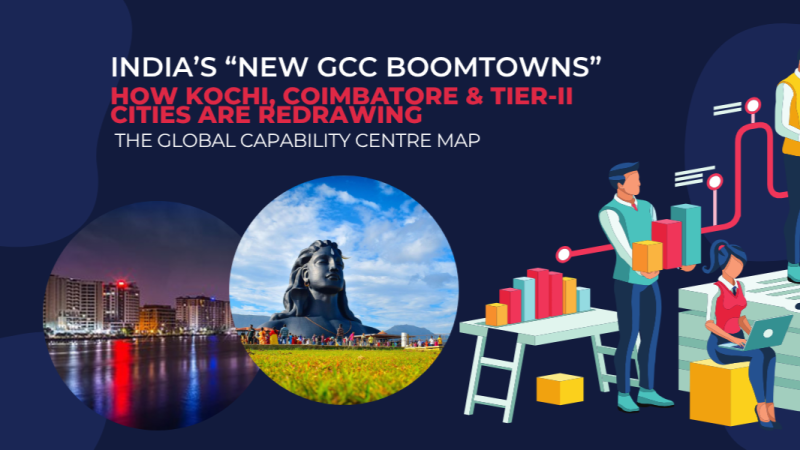
The redrawing of talent maps is not about choosing between metro and Tier-II cities — it is about creating an integrated workforce strategy. GCCs that successfully blend cost advantage with leadership depth will gain a competitive edge.
As digital transformation accelerates, talent strategy will define organisational resilience. The future belongs to centres that can combine scale, specialization, and sustainable leadership development — regardless of geography.


