


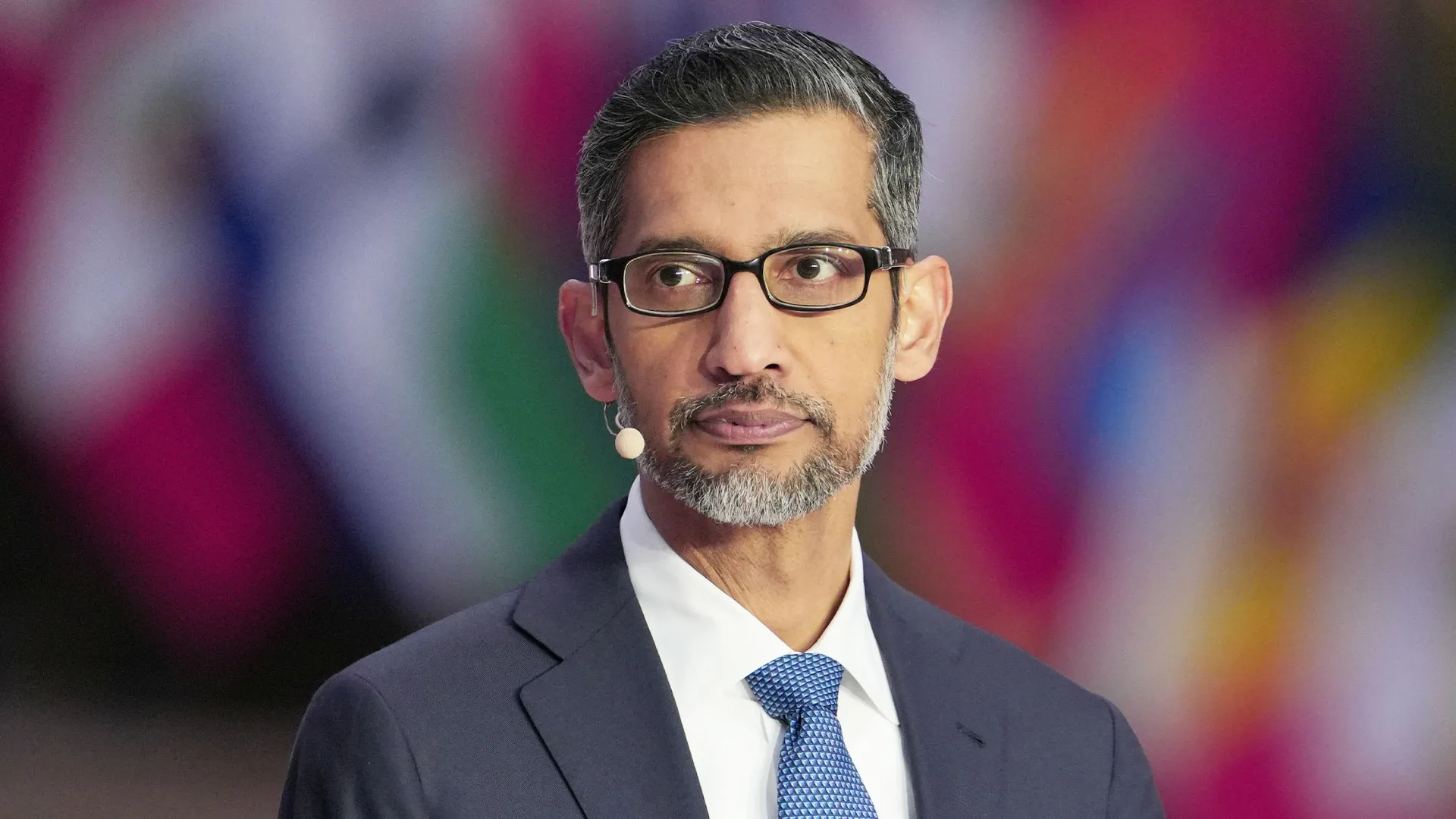
Artificial Intelligence is evolving at a pace that is reshaping industries, challenging traditional roles, and redefining leadership itself. In a recent conversation, Google CEO Sundar Pichai made a thought-provoking statement—AI might one day be capable of doing his job. This bold remark not only reflects his confidence in technological advancement but also signals how transformative AI could become in the near future.
A CEO Who Believes in AI’s Potential
Sundar Pichai has been one of the strongest advocates for AI innovation. Under his leadership, Google has built and invested heavily in large-scale AI models, machine learning systems, and cutting-edge research through Google DeepMind. His recent comment suggests that AI could eventually possess the decision-making abilities, analytical skills, and leadership qualities needed to run a massive tech company.
Instead of viewing this as a threat, Pichai framed it as a natural progression of technology—highlighting how AI could amplify efficiency, accuracy, and long-term strategy execution.
Why AI Could Perform CEO-Level Tasks
While AI is far from replacing human intuition and emotional intelligence, it is rapidly becoming capable of:
- Analyzing vast datasets faster than human teams
- Predicting business trends with high accuracy
- Supporting high-stakes decision-making through real-time insights
- Optimizing operations, logistics, and resource allocation
- Automating repetitive leadership tasks such as reporting, forecasting, and internal communication
Many administrative functions traditionally handled by executives are already being automated through AI-driven dashboards, analytics tools, and workflow systems.
Leadership Still Requires a Human Touch
While AI’s capabilities are growing, Pichai acknowledged that empathy, creativity, and ethical judgment remain irreplaceable qualities of human leadership. CEOs must inspire teams, navigate workplace culture, manage crises, and build long-term vision—areas where AI still cannot compete.
Thus, his statement reflects more of an optimistic outlook on AI’s potential rather than a prediction of immediate replacement.
A Vision for the Future of Work
By suggesting that AI could one day run Google, Pichai encourages industries to rethink their relationship with technology. Instead of resisting AI integration, he advocates for responsible adoption that enhances human potential. His vision aligns with a future where AI acts as a powerful collaborator, not just a tool.
Professionals across all sectors—tech, finance, healthcare, marketing, and HR—should view this era as an opportunity to upskill, adapt, and innovate alongside AI, rather than compete with it.
Conclusion
Sundar Pichai’s remark is more than a headline—it’s a glimpse into the future of leadership and workplace evolution. As AI continues to grow smarter and more capable, the question isn’t whether it will transform leadership roles, but how organizations can balance automation with human intelligence.
The future may see AI as a strategic partner in the boardroom—but human insight will remain at the heart of decision-making for years to come.


